
Please introduce yourselves
Jay (J) I’m Jay Ishak, the CEO and Co-Founder of MyFashionChamber. For over two decades, I’ve been organising and curating events across industries, from corporate and government to the arts and international culture. But it was about nine years ago that fashion and diplomacy became my purpose. I now channel my experience to build strategic connections that drive industry impact, locally and globally. You could say I’m an event architect. I design frameworks and platforms that bring people, policies, and possibilities together. Curator of a bold movement to elevate Malaysia’s fashion narrative, not just as a local industry but as an international force of creativity and cultural capital.
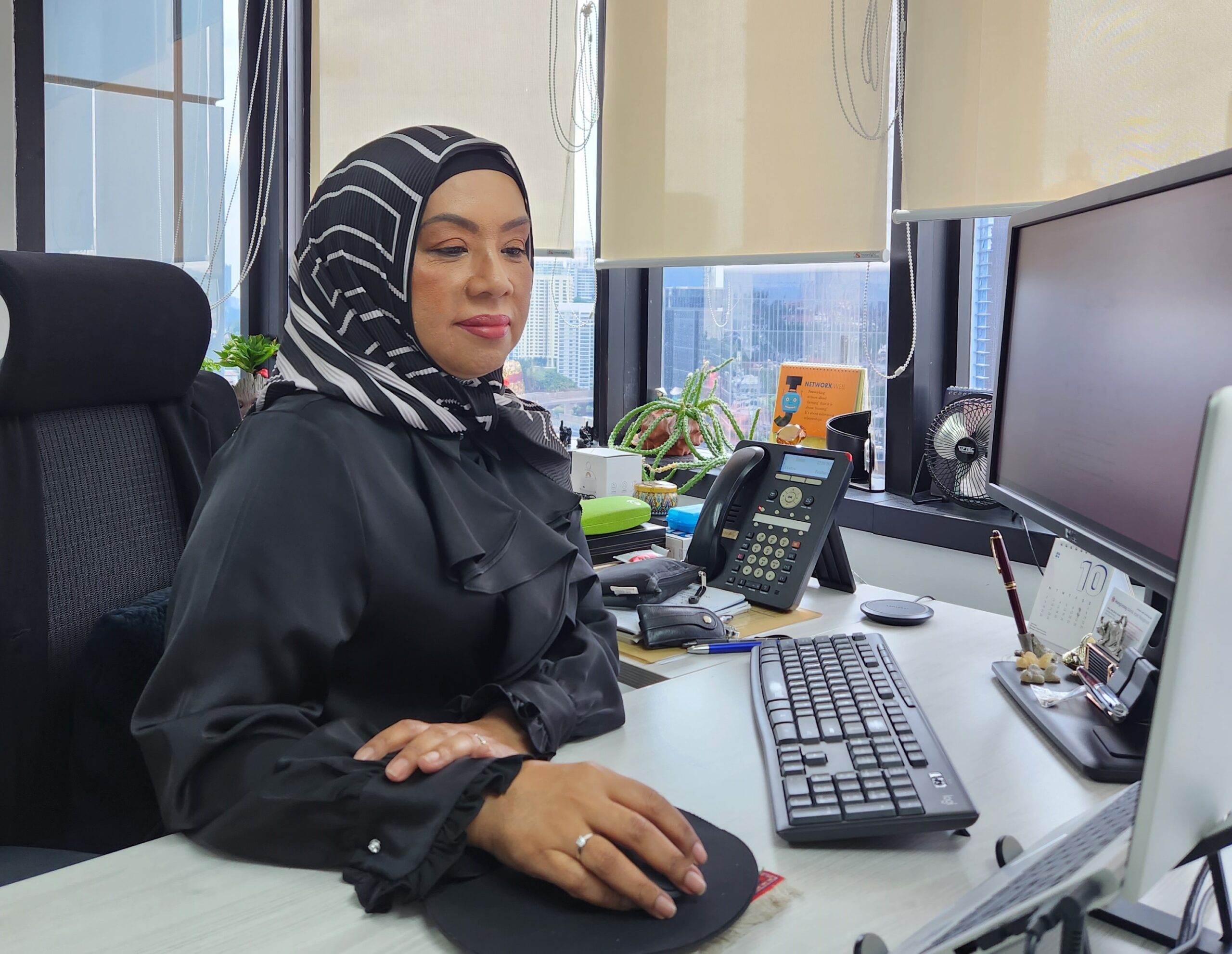
Leena (L) I’m Dr. Leena Al Mujahed, Founder and Chairman of MyFashionChamber. My journey began far from the fashion world — in medical sciences, humanitarian work, and business — but along the way, I discovered that my true passion lies in empowering women and using culture as a bridge between worlds. Fashion became my unexpected language — a powerful way to tell stories of resilience, identity, and transformation.
What started as a humble initiative to support refugee women through sewing has grown into a larger movement — one that champions inclusive fashion and cultural diplomacy. Today, I’m proud to be part of an effort that is not only redefining what fashion means, but also stand with Malaysia step confidently onto the global fashion stage Because Malaysia doesn’t follow, it leads, with grace and strength rooted in its diversity.
Walk us through how the initiative for MyFashionChamber came about
(J) It began during my term as President of MODA. I saw glaring gaps in how our fashion industry was being treated: disconnected, under-supported, and lacking a unified voice. I collaborated with everyone I could, from ministries to media, and made sure MODA’s name was seen and heard. But I also realised: helping designers alone doesn’t complete the ecosystem.
When I attended the BRICS+ Fashion Summit in Moscow and the Global Apparel Conference in China in 2023, the truth hit hard. Malaysia does not have a Fashion Chamber of Fashion Council like other countries have. Malaysian fashion was being parked under tourism, not trade. That model may bring exposure, but NOT long-term economic viability. That’s when the sleepless nights began, asking: Who’s shaping the future of Malaysian fashion? And who’s making sure we have a seat at the global table?
From this urgency, MyFashionChamber was born, to not be just another association, but a national platform designed to advocate, connect, protect, and propel the entire ecosystem. Designers, artisans, students, educators, producers, entrepreneurs – everyone has a role in fashion’s future.
Dr. Leena urged me to come out with something, a tangible platform that benefits and is able to create impact. I decided to work on something that unifies everyone, all players, big or small. Enough of industry players working in silos. I adopted the process of curating an event into building MyFashionChamber, working backwards from the outcome that we want, right up to the decision on which platform to build this organisation.
(L) MyFashionChamber was born from a vision to connect creativity with commerce and to give Malaysia the fashion institution it deserves. I saw incredible talent in this country, but also fragmentation. So together with Jay, we created a Chamber that bridges designers, policymakers, industry, and education. It’s more than a network, it’s a movement to define Malaysia’s voice in global fashion.

Malaysia has always been a melting pot of cultures. How does MyFashionChamber plan to stitch that diversity into a cohesive brand identity?
(J) We’re not hiding our patchwork, we’re highlighting it. Malaysia’s strength lies in its cultural plurality. MyFashionChamber treats that diversity as a living asset. We aim to stitch it together through inclusive representation, curated narratives, regional showcases, and integrated education. Weaving tradition into innovation. It’ll be a long road ahead, a long journey, but we have to start somewhere. Someone or an organisation need to propel it forward.
From Penan weavers to Peranakan beadwork, from Hijabi streetwear to Indian heritage couture, we bring them under one umbrella, not to dilute their identity, but to showcase our national fabric as a harmonious whole. Our approach isn’t about erasing lines, but connecting them across ethnicities, faiths, regions, and generations to create a fashion identity. This is how we create a brand identity that is cohesive in values, but diverse in voice. Proudly Malaysian, globally magnetic.
(L) We believe Malaysia’s strength is its diversity. Our Chamber doesn’t seek to homogenize it; instead, we celebrate it.
In a world obsessed with global trends, how do you define what ‘Malaysian fashion’ really means?
(J) Malaysian fashion is not a trend. It’s a timeline. It’s heritage in motion. A living archive of who we were, who we are, and who we’re becoming. It’s rooted in heritage like the baju kurung, batik, songket, pua kumbu (to name a few), but it’s also expressive of urban boldness, regional flair, and cultural reinvention.
It’s modest wear taking global runways, it’s indigenous patterns interpreted through modern silhouettes, it’s Gen Z youth mixing street style with cultural codes. Malaysian fashion is a chorus, and it’s time we sing it proudly to the world.
(L) Malaysian fashion isn’t just about what we wear it’s about who we are. It’s modesty with innovation, heritage with vision, tradition reimagined for tomorrow. It’s the spirit of the baju kurung, the soul of batik, and the resilience of artisans blended into garments that carry meaning. It’s not fast fashion, it’s meaningful fashion.
Are you positioning Malaysian designers to speak with a global accent or a local voice that’s finally being heard?
(J) Both, unapologetically. A strong local voice is a global accent when it’s authentic. We’re not preparing our designers to mimic what’s out there. We’re preparing them to resonate by grounding them in their roots, then equipping them with the tools, access, and exposure to share their stories confidently on the global stage. Malaysian designers don’t need to “catch up.” They need to be amplified.
(L) Both. Our designers are fluent in global aesthetics, but they don’t mimic. they reinterpret. We want their local stories to echo globally. It’s about showing the world that “Made in Malaysia” isn’t just a label, it’s a language of craftsmanship, sustainability, and story-driven design.
What makes the Chamber confident that Malaysia is ready to be more than just a manufacturing hub and finally a fashion capital?
(J) Because for years, we’ve been producing for others. Now, it’s time we start introducing ourselves.
Malaysia has long been part of the global fashion supply chain, quietly powering international brands with our skilled labour and manufacturing capabilities. But manufacturing is only one part of the fashion economy. The real influence and value lie in design, branding, storytelling, innovation, and trade ownership. And that’s where we’re shifting the focus.
At MyFashionChamber, we’re confident because:
● We have the talent. Malaysia is home to a generation of culturally rooted, globally-minded designers. They’re not lacking creativity, they’ve been lacking infrastructure and access.
● We have cultural currency. Our multiculturalism gives us a unique design language that cannot be replicated. From indigenous textiles to streetwear to modest fashion. We’re sitting on a fashion identity the world craves but doesn’t yet know how to read. We’re here to write that narrative.
● We have momentum. International platforms are beginning to take notice. Our participation at events like Abu Dhabi Modest Fashion Week, BRICS+ Fashion Summit, and MIHAS modest fashion showcase proves that Malaysia is more than just a guest or participants. We can be a key player.
● We’re building the ecosystem. Through MyFashionChamber, we’re no longer just showcasing talent, we’re structuring it. We’re developing policy alignment, trade pathways, export-readiness programs, cultural diplomacy, and industry recognition that are all critical to becoming a true fashion capital.
● And most importantly, we’re evolving our mindset. We’ve moved from “Let’s be seen” to “Let’s be strategic.” This shift in intent, from visibility to viability, is what gives us the confidence.
The blueprint is being drawn, but it’s not static. We’re open to evolve, pivot, and grow because that’s what true fashion capitals do: they don’t just follow trends, they set them. And Malaysia is ready to lead.
(L) Because we’ve seen what happens when talent meets infrastructure. Malaysia has long produced for the world. now it’s time to create for it. We have world-class universities, a supportive government, and designers who are winning international awards. The Chamber is here to unite these strengths, brand them powerfully, and position Malaysia not just as a supplier, but as a style setter.

How do you plan to handle the paradox of fashion, which is promoting exclusivity while advocating for inclusivity?
(J) I reject that binary. Fashion can be exclusive in design and inclusive in access. We promote excellence, not elitism.
MyFashionChamber ensures inclusion through regional talent scouting, mentorship for fashion communities, and participation opportunities for designers with special needs. We don’t just create space, we design access. Every designer should feel empowered to create. Every consumer should feel seen.
(L) Fashion doesn’t have to choose between being exclusive or inclusive we believe it can be both. At MyFashionChamber, we promote modest luxury fashion that is elegant but also accessible. We focus on creating space for everyone, whether it’s through adaptive designs for people with different needs, or by supporting refugee and indigenous women in fashion. To us, real luxury means everyone feels seen, valued, and included.
The Malaysian fashion scene has its shining moments. Is MyFashionChamber the thread that finally weaves them into an industry?
(J) Yes, and it’s about time. What we’ve had are moments, bursts of brilliance, but no backbone. Our scene was full of energy but lacked a system to sustain it. MyFashionChamber is creating that backbone, nurturing ecosystems, building industry standards, fostering international partnerships, and making sure these moments become milestones.
We set standards. We connect talent to trade. We want to protect cultural IP. We represent Malaysia at global forums and invite the world to visit us. What used to be moments of shine are now building blocks for long-term impact.
(L) Absolutely. We’re not here to add another voice, we’re here to orchestrate harmony. Designers, academics, business leaders, and media. We’re bringing them under one umbrella to create a solid, sustainable fashion ecosystem. MyFashionChamber is the thread that turns scattered sparks into a lasting flame.
Beyond runways and hashtags, how will you ensure that fashion in Malaysia becomes an actual economic engine?
(J) By connecting creativity with commerce. That’s our tagline. We’re mapping fashion’s value chain, from raw material to retail, from digital sales to export-ready brands. Execution strategies include:
● Digital B2B platforms to connect designers with international buyers.
● Export missions in partnership with MATRADE.
● Data collection and economic valuation to lobby for fashion in national policy.
● Fashion-focused trade agreements to increase market access for Malaysian brands
● Business accelerator programs to train creatives in scaling up sustainably.
But here’s where we’re also being bold: We’re collaborating with Allianz and have developed FROC; Fashion Risk & Operational Coverage.
Why Allianz, and why now, you may ask.
Because if we want to turn fashion into a true economic engine, we have to treat it like a serious industry, and serious industries require risk management. For too long, fashion has been seen as unpredictable, unstable, even high-risk. But through FROC, we’re offering insurance solutions tailored specifically for fashion businesses; from event coverage and shipping of high-value goods to production delays and intellectual property protection.
This partnership with Allianz is a strategic move to:
● De-risk the industry so investors and banks take fashion more seriously.
● Provide a safety net for small businesses and independent designers, who are the backbone of our creative economy.
● Elevate the perception of fashion as a viable, secure, and scalable industry.
If tourism, agriculture, and construction have custom insurance products, so should fashion. This is part of how we shift the narrative, create financial infrastructure, and build long-term industry confidence.
Fashion isn’t just art on a hanger. It’s a business, and now, finally, it has business tools to match. Fashion can be a key GDP contributor if it’s treated like one.
(L) We focus on three pillars: capacity-building, global branding, and investment attraction. We work with government, investors, and trade bodies to position fashion as part of Malaysia’s creative economy – with export potential, job creation, and tourism impact. It’s not just about shows it’s about strategy.
In fashion, green is the new black. Are Malaysian brands ready to go beyond buzzwords and commit to the cost of sustainability?
(J) Sustainability isn’t a cost. It’s an investment. Not all Malaysian brands are ready, but many are willing, if the right support exists. We need to move from buzzwords to blueprints. Move from awareness to action, so sustainability becomes a standard, not a slogan.
At London Fashion Week, for instance, the Institute of Positive Fashion provides measurable guidelines, circular economy targets, and mentorship to designers. Helsinki Fashion Week banned leather and highlighted sustainability as a non-negotiable. We’re studying these models.
In Malaysia, MyFashionChamber will be
● Working with government bodies to provide incentives for sustainable sourcing.
● Collaborating with textile innovators and circular economy experts.
● Building awareness through workshops and forums that deconstruct what real
sustainability means, including cost, community, and carbon.
(L) Yes, and they must. Sustainability is a responsibility. Through our Chamber, we’re supporting designers with training, ethical sourcing networks, and sustainable innovation grants. We also promote circular fashion and slow production models. It’s not easy but it’s necessary.


Who gets to be ‘fashionable’ in Malaysia, and who gets left behind? Is the Chamber going to reshape that narrative?
(J) Historically, it was the urban, the elite, the westernised. But that’s changing. We’re reshaping the narrative to include:
● Orang Asli craftspeople creating heritage accessories.
●`Regional talents from Sabah and Sarawak are redefining ready-to-wear.
● Refugee women sewing modest wear for international orders.
● Neurodiverse and differently-abled designers creating inclusive fashion.
● Gen Z hijabi influencers are mixing streetwear with tradition.
The Chamber is going to reshape that narrative. MyFashionChamber is expanding the lens. Fashionable is no longer a look — it’s a voice. And every voice deserves a platform.
(L) Fashion belongs to everyone. But historically, many voices like refugee women, indigenous artists, or those outside urban centers have been left out. We’re reshaping that by providing platforms, training, and representation. The future of fashion is not elite, it’s inclusive.
Malaysia is rich in indigenous textiles – are they celebrated or just commodified? Give us your thoughts on this.
(J) Too often, they’re commodified, stripped of credit and context. But we’re changing that. We believe in cultural guardianship, not cultural appropriation. MyFashionChamber is working to ensure artisans are not just suppliers, but celebrated stakeholders, with intellectual property protections, fair trade access, and representation.
Take Pua Kumbu, for example. We are looking at working with longhouse weavers to ensure their craft is recognised through Geographical Indication (GI) protection, fair trade channels, and storytelling exhibitions. Songket, which received UNESCO status, must now be scaled with integrity, not diluted with synthetic shortcuts.
We push for cultural guardianship, not just consumption.
(L) At MyFashionChamber, we focus on ethical collaborations, storytelling, and giving artisans ownership in how their work is showcased. Respect is non-negotiable.
Fashion is often dismissed as frivolous. How do you intend to change that perception in a country where the arts are still fighting for legitimacy?
(J) Fashion is not frivolous. It’s fundamental to how we express, connect, and grow as a nation. By showing the numbers and the stories. By proving that fashion is not just fabric, it’s the future.
Fashion employs thousands across multiple sectors: design, textile, media, logistics, education, and more. It drives tourism, exports identity, and inspires innovation. We’re developing:
● Economic reports to quantify its value.
● Creative diplomacy campaigns.
● Fashion x Tourism packages.
● Cross-ministry advocacy to push fashion into national development plans.
Fashion is not fluff; it’s fuel. And we intend to prove it.
(L) We’re using data, partnerships, and policy advocacy to show fashion’s contribution to GDP, tourism, identity, and international relations. It’s time fashion is seen not as an indulgence, but as an industry.
What would that success for MyFashionChamber actually look like, 5 years from now?
(J) ● Malaysian brands are stocked internationally, meaning they’re on shelves in Tokyo, London, Dubai and many other countries.
● Our designers are invited to present on global runways, and get orders after.
● Indigenous textiles have certified IP protection.
● Fashion education is industry-aligned, with modules on trade, tech, and sustainability.
● Malaysia is recognised not just as a manufacturing base, but a fashion capital with vision.
(L) A recognized Malaysian fashion identity on the global stage. Designers who are household names. A thriving creative economy with jobs and exports. Sustainable production. And most importantly, a fashion culture that’s inclusive, proud of its roots, and bold about its future.
Is the Chamber here to protect fashion, or to provoke it?
(J) Both. We’re here to protect its roots and provoke its growth.
We protect what’s sacred, our crafts, our culture, our makers.
We provoke what’s stagnant elitism, old models, and outdated mindsets. MyFashionChamber is here to preserve, progress, and provoke, because the future of fashion won’t come from playing safe. Fashion isn’t supposed to be safe. It’s meant to reflect society, and sometimes challenge it. We’re not here just to blend in. We’re here to lead forward.
(L) To provoke it, respectfully. We honor tradition but challenge limitations. We’re here to push boundaries, provoke dialogue, and spark transformation because true protection comes not from preservation, but evolution.
Where can Fab! Luxe readers know more about or be a part of MyFashionChamber initiatives?
(J) Join us at www.myfashionchamber.org and follow our movement on Instagram @myfashionchamber.
We welcome:
● Malaysian and international designers
● Fashion students and educators
● Cultural workers, artisans, media, policymakers
● International creatives looking to access the Asia market through Malaysia
There’s a seat for everyone at our table. Now this is more than a fashion movement. It’s a national transformation. And it’s open to the world. And definitely, Fab! Luxe is welcome to join us.
(L) Visit our website at www.myfashionchamber.com or follow us on Instagram and LinkedIn @myfashionchamber. We welcome members, partners, and curious minds who want to be part of Malaysia’s fashion revolution.
Jay Ishak

Favourite book genre
Self-development and memoirs of industry changemakers
Best book you’ve read this year
“Ikigai” by Francesc Miralles & Héctor García
The last music you downloaded
About Damn Time – Lizzo
The music that changed everything for you
● Retro 80s : because that era had style, attitude, and unapologetic expression
● Classic soul and R&B : where emotion met artistry
Things you’ll always have in your fridge
Dark chocolates
Morning routine
● A glass of salt water to ground the body, a prayer to ground the soul
● Journaling 5 things I’m grateful for, then reviewing my day’s game plan
● No screen time until after I centre myself
A typical day for you
● Working on my MacBook, bouncing between strategy decks, WhatsApp, and curating collaborations
● Creating momentum : one call, one message, one solution at a time
What have you come to appreciate the last 2 years
● That protecting my energy is a leadership act
● That ‘slow’ is sometimes the speed needed to build something that lasts
Definition of success to you
Creating something bigger than myself, without losing who I am
Biggest inspiration comes from
People who do things before they’re ready
One gadget you can’t do without
iPhone (my mobile office and memory bank)
Country you can’t wait to go back to
Russia (the depth of culture, contrast, and architectural drama inspires me)
Favorite podcast(s)
● On Purpose with Jay Shetty
● A Bit of Optimism with Simon Sinek
Something you’ve recently discovered
Pickleball (surprisingly addictive)
Philosophy in life
Do it with heart or don’t do it at all
Your style icon
David Beckham (sharp tailoring and versatile suits, from classic to edgy)
Best things about Malaysia
Our cultural depth. You can wear, taste, and hear it
Favourite quote and why
“Elegance is not about being noticed, it’s about being remembered.” ~ Giorgio Armani. Resonate with substance over spectacle. My work in diplomacy, fashion, and leadership is about lasting impact, not temporary applause.
Why journal?
It’s my way of keeping my purpose aligned with my pace
Your workout?
● Cardio and weight-lifting to stay strong
● Badminton keep me competitive
● Currently, pickleball, because it’s strategic and social
What’s in your glass and plate for teatime
A glass of warm water or hot lemon. Nothing on the plate.
An indulgence you’ll never forgo
A good body massage and reflexology session (it’s how I reset, realign, and recharge).
Work of an artist you collect (or would collect if you could)
Nick Knight. His fashion photography blurs the line between image and emotion, tradition and technology)
Dr Leena Al-Mujahed

Best book you’ve read this year
Becoming by Michelle Obama
The last music you downloaded
Fairuz — her voice always brings me peace and nostalgia
The music that changed everything for you
Faded by Alan Walker. It was the first song I heard from my only daughter after two years of separation. That moment broke me and healed me all at once. I decided then that no matter what it took, I would rebuild her life and mine – with love, safety, and purpose.
Things you’ll always have in your fridge
Almond milk and avocado
Morning routine
First, I check on my family to make sure they wake up safe, rested, and smiling, because I’ve lived through the pain of losing loved ones in the night. Then I check the news to see if the world is still standing or if World War III has started. Once I know both my home and the planet made it through the night, I can start my day with a little more peace.
A typical day for you
Calls, meetings, planning, creating, advocating; and somewhere in between playing with my baby niece
What have you come to appreciate the last 2 years
I’ve come to appreciate healing – the quiet kind that takes time. After losing my brother, I lived in a cocoon of grief and pain for so long. But over the last two years, I’ve slowly learned to live again. I’ve made peace with the loss, and I’m finally able to step out of the darkness with love, not just sorrow.
Definition of success to you
Success is using your voice to lift others and still being able to sleep peacefully at night.
Biggest inspiration comes from
Women who rise after being broken.
One gadget you can’t do without
My phone
Country you can’t wait to go back to
Yemen always. It’s where my roots are, where my story began. No matter where life takes me, a part of my heart is still there.
Favorite podcast(s)
“Welcome Hostility”,“How Relationships Succeed” with Yasser Al Hazimi on the Finjan Podcast.
Something you’ve recently discovered.
That saying “I’m free after this week” is the biggest lie I keep telling myself
Philosophy in life
Never forget where you come from.
Your style icon
Middle Eastern women royals like Queen Rania of Jordan, Sheikha Moza of Qatar, and Princess Ameerah of Saudi Arabia.
Best things about Malaysia
The kindness of its people, the diversity of its culture and the food.
Favorite quote and why
“She remembered who she was, and the game changed.”
Your workout routine
I love walking in nature and doing Pilates, Horse ridding and paddle.
What’s in your glass and plate for teatime
Dates and dark chocolate
An indulgence you’ll never forgo
Scented candles and a really good oud perfume
Work of an artist you collect (or would collect if you could)
I’m drawn to the work of Islamic calligraphers and contemporary Middle Eastern artists. If I could, I’d collect pieces that speak of identity, struggle, and beauty especially art that blends tradition with modern storytelling.