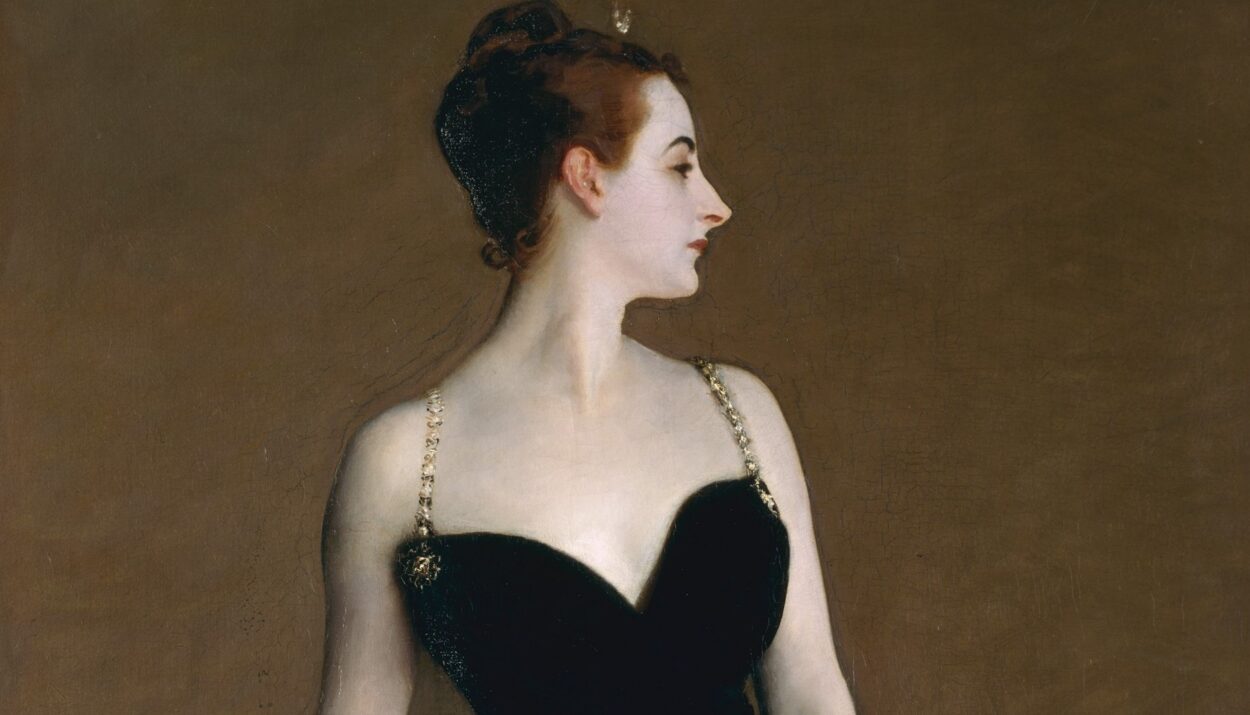
Image of Madame X by Commons
There is a particular kind of loneliness that comes with being deemed as “not-the-pretty-one” when you are young. It is not always loud or dramatic. Sometimes it arrives quietly amidst the laughter that lingers too long after someone makes a joke about your appearance or in the silence when your prettier friends are complimented while you are ignored and in the way people look through you as though you are invisible. Before I ever understood the term ‘pretty priviledge’, I had already lived without it.
Growing up, I was painfully aware of where I stood in the social hierarchy of beauty. A school corridor can be an unforgiving place, especially for girls who do not fit conventional standards. I was the ‘before’ in everyone’s imaginary transformation story. Too awkward, too plain or too different; the kind of girl people described with backhanded compliments like, “At least you are smart”, or worse, “You’ll be pretty someday.”
What people often fail to realize is that constant exposure to criticism changes the make of your mind. It reshapes the way you enter rooms or the way you speak and even the amount of space you allow yourself to occupy. Psychologically, being deemed unattractive made me hyperaware of rejection. I learned to expect dismissal before it even happened. Compliments felt suspicious and attention almost always felt accidental.
Years later, everything changed.
The transformation itself was slow and gradual, but society’s reaction to it was immediate. Suddenly, strangers gave applauding smile and stare, they were kinder, doors were held open and compliments became a daily occurrence rather than a rare surprise. People who once overlooked me now wanted conversations or friendships and most of all, the unwavering admiration. The difference was so stark that it felt almost dramatic, as though I had unknowingly stepped into another person’s life.
Then came the beauty pageant.
Even now, writing these words feels surreal. There is irony in becoming a beauty queen after spending years believing you were the ugly duckling in every room. The night of the pageant still replays vividly in my mind. The bright stage lights, the impossible nervousness sitting in my chest and oh, the moment when my name was announced. For a few seconds, I genuinely froze. I remember hearing applause while feeling disconnected from my own body, as though I were watching someone else walk toward the crown.
People love to call stories like mine cliché. The awkward girl grows up beautiful or the underdog wins the pageant. It sounds like the plot of a coming-of-age film which is always neat and predictable. However, living it is nothing like the movies.
What films rarely show is the psychological confusion that comes afterward.
When the world suddenly treats you differently, you begin questioning everything. Were people finally seeing me? Or were they only responding to the version of me they found nice to look at?
Pretty priviledge is unsettling because it exposes how conditional
human kindness can be.
The compliments were flattering, yes, but they were also revealing. I noticed how frequently beauty became a substitute for substance in the eyes of others. People assumed confidence, intelligence, even kindness simply because they liked my appearance.
That realization can be psychologically disorienting.
Winning the pageant did not magically erase years of insecurity; if anything, it complicated them. On one hand, I felt triumphant and validated. There was undeniable satisfaction in achieving the very standard that once excluded me. To stand on stage crowned beautiful by the same society that once made me feel undesirable felt almost poetic.
But another part of me struggled deeply.
I often think about the younger version of myself, the girl who avoided mirrors and shrank herself to survive socially. She still exists somewhere inside me. Crowns and compliments do not entirely silence her. Sometimes, despite external validation, I still catch myself waiting for ridicule that never comes. Truth be told, trauma has a long memory.
At the same time, the experience has given me a perspective few people discuss honestly. Having lived on both sides of beauty standards allows you to see how dictatorial and fragile they are. Beauty opens doors, softens criticism and grants social placements in ways many people refuse to acknowledge. Yet it also creates pressure to maintain perfection, as though your worth has become dependent on remaining desirable.
The crown represented more than physical beauty to me. It represented survival and a reinvention, if you will. The knowledge that a person is not permanently defined by the labels placed upon them in adolescence. Standing there as a beauty queen was not simply about looking beautiful, it was about confronting every cruel memory that once convinced me I never could be.
And perhaps that is why the moment felt so overwhelming; not because I had finally become worthy, but because I realized I always was.